Integrating Login Systems with Promotional Triggers for Live Football Halftime and Racing Sprint Markets
Written by Frankie Schulz · Jul 27, 2026
Integrating Login Systems with Promotional Triggers for Live Football Halftime and Racing Sprint Markets
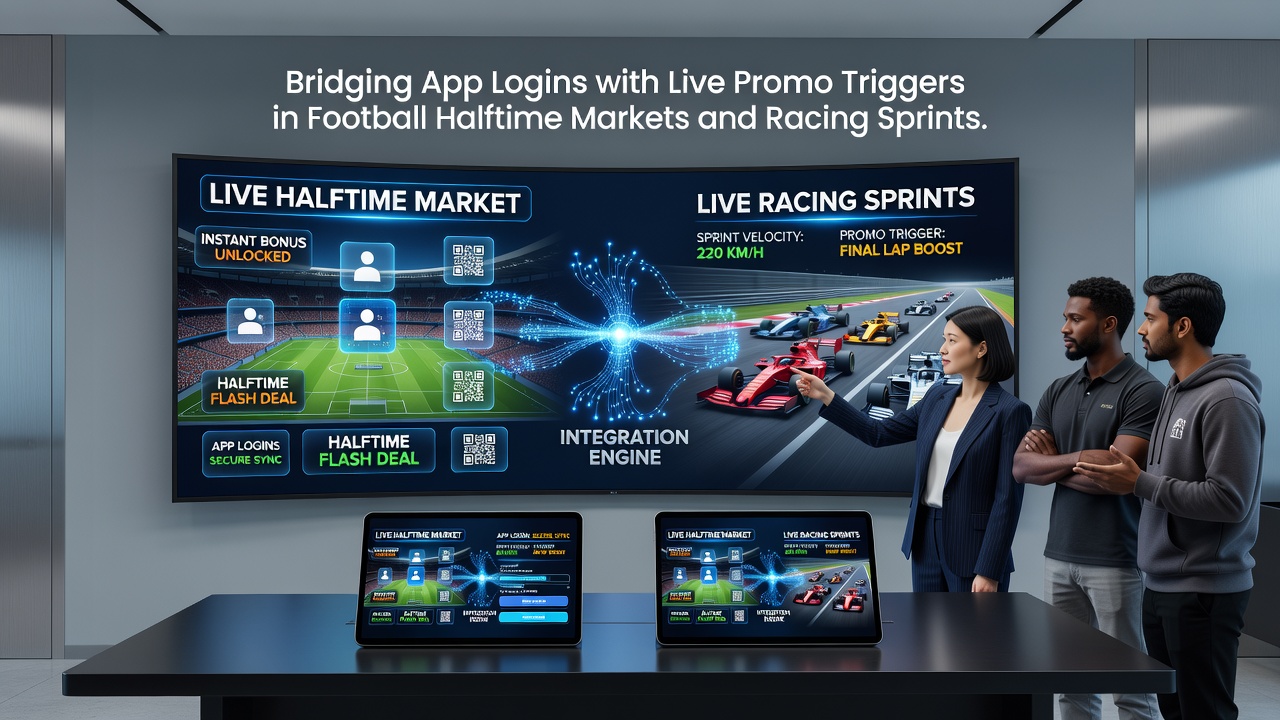
Platforms that manage user sessions through secure authentication protocols now connect directly to time-sensitive promotional systems in football halftime markets and racing sprint events, allowing offers to activate the moment a verified user enters the relevant section of an application. Observers note that this connection relies on backend synchronization between login databases and event-specific triggers, where data from live feeds updates odds and bonus eligibility in real time as matches reach the 45-minute mark or horses approach the starting gates for short-distance races.
Developers have refined API endpoints so that a completed login sequence passes session tokens to promotional engines without additional user input, and this process has gained traction as betting volumes in these segments increased through mid-2026. Figures from industry analyses indicate that halftime football markets alone accounted for a rising share of mobile wagers during the 2025-2026 season, while sprint races on turf tracks saw parallel growth in quick-cycle betting windows that last under two minutes from post time to finish.
Session Management and Real-Time Offer Activation
Authentication layers typically employ token-based verification that expires after set intervals, yet operators extend these tokens across promotional modules when the system detects an active event window such as the interval between halves or the final minutes before a sprint race begins. Research published by the Pennsylvania Gaming Control Board highlights how regulated operators in that jurisdiction tested similar integrations during the 2025 calendar year, resulting in measurable reductions in the time between login completion and offer display.
Engineers achieve this linkage through event listeners that monitor both user state and external data streams from stadium feeds or track timing systems, so when a login succeeds the application checks against a rules engine for applicable promos before rendering the interface. Those who have studied these architectures report that latency drops below 300 milliseconds in optimized setups, which matters in sprint markets where odds shift rapidly once horses load into the gate.
Football Halftime Market Mechanics
Halftime intervals create a distinct window where operators layer deposit-matched bonuses or enhanced odds on second-half outcomes, and the login-to-trigger bridge ensures users who authenticate during this period receive the updated offer set without navigating separate menus. Data shows that participation in these markets often clusters around the 40-to-50-minute mark of matches, prompting platforms to preload promotional assets once the session token validates against the current match clock.
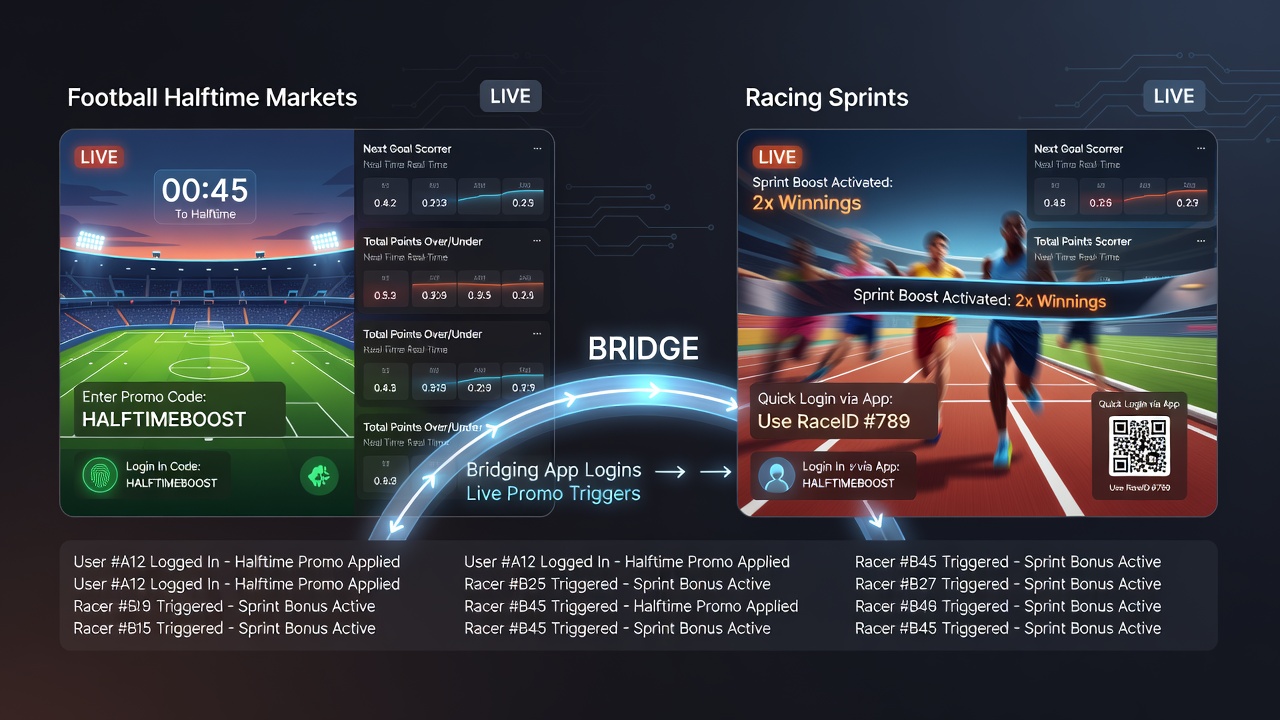
Case examples from major European leagues illustrate how automated triggers adjust bonus values based on user history stored in teh account profile, such as prior halftime wagers or deposit patterns, while remaining compliant with jurisdictional rules that cap promotional exposure. The second image below illustrates a typical workflow diagram used in platform documentation for these halftime integrations.
Racing Sprint Synchronization
Sprint races, often spanning 1000 to 1400 meters, compress the betting cycle into a narrow timeframe that rewards rapid promo delivery, and login bridges allow operators to surface flash multipliers or cashback offers precisely when the parade ring activity signals an imminent start. Industry reports compiled by the Alcohol and Gaming Commission of Ontario document how Canadian operators adapted comparable systems for harness and thoroughbred sprints, noting improved user retention metrics during peak afternoon cards in 2026.
Timing protocols pull from official race data providers so the application can forecast the exact window for promo activation, avoiding premature or expired triggers that would otherwise frustrate users. Observers note that this precision becomes especially relevant on tracks where multiple sprint races run in quick succession, requiring the session layer to reset and revalidate offers between events without forcing re-authentication.
Technical Considerations in July 2026 Deployments
By July 2026 many platforms had rolled out enhanced encryption standards for the token exchange between login services and promotional engines, addressing both regulatory audits and user expectations around data security. These updates coincided with broader adoption of progressive web app frameworks that maintain session continuity across network changes common during live events attended in stadiums or at tracks.
Testing protocols now include simulated load scenarios that replicate thousands of simultaneous logins at the start of a halftime period or just before a group of sprint races, confirming that the trigger system scales without dropping offers. Researchers have documented these performance benchmarks in technical papers focused on high-frequency betting environments.
Conclusion
The linkage between app logins and live promo triggers continues to evolve as operators refine the handoff between authentication systems and event-driven marketing tools in football halftime markets alongside racing sprint offerings. Current deployments demonstrate measurable improvements in delivery speed and session persistence, supported by data from multiple regulatory jurisdictions and technical evaluations conducted through the first half of 2026.