Rapid Funding Mechanics Powering Split-Second Choices Across Soccer Fields, Racecourses, and Casino Floors
Written by Zoe Reed · Aug 26, 2026
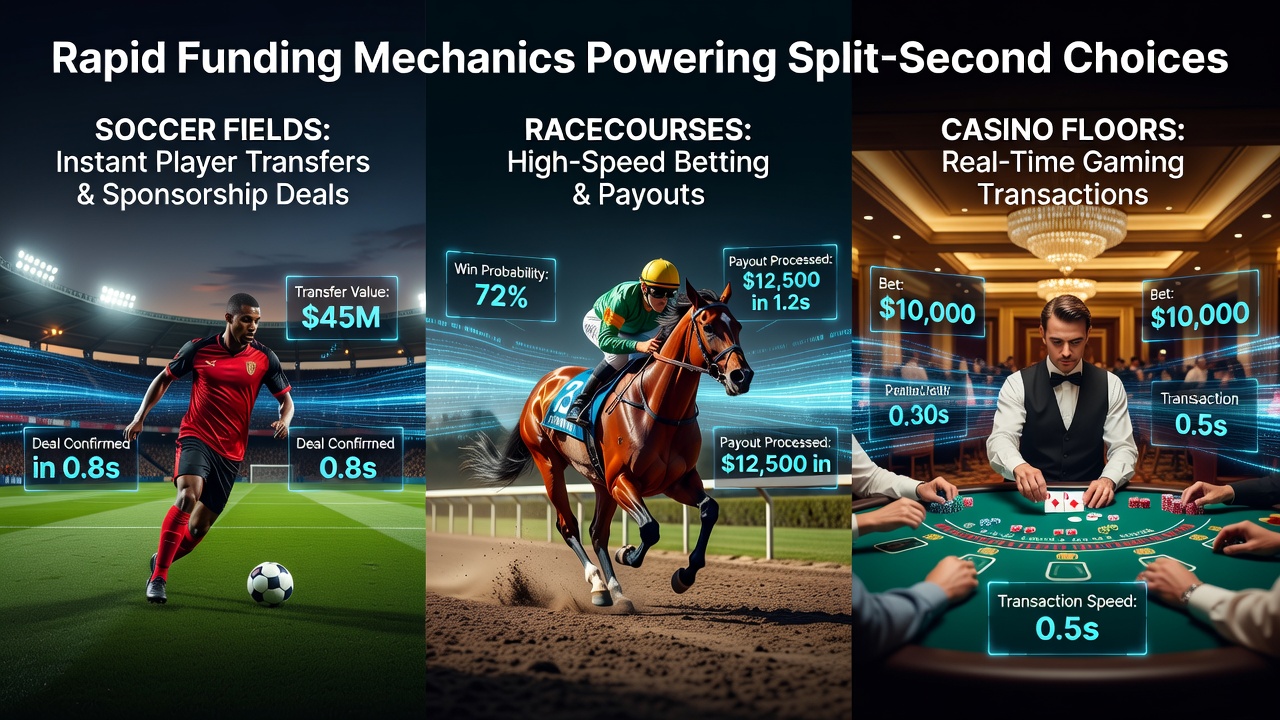
Rapid Funding Systems Driving Instant Wagers in Football Matches, Equine Competitions, and Table Games
Payment networks now handle deposits in under two seconds across multiple platforms, which lets participants place live wagers while a football match shifts momentum or a horse rounds the final bend. These systems rely on encrypted API connections between banks, digital wallets, and betting operators that confirm balances before any odds change. Observers note that integration with mobile carriers further speeds verification since location data and device tokens replace manual entry steps. Data from regulatory filings show transaction success rates above 98 percent during peak evening hours in major markets. Such reliability stems from redundant server clusters that reroute requests when one pathway slows. In August 2026 several North American operators expanded partnerships with regional credit unions, cutting average approval times by another 300 milliseconds according to industry performance logs.
Payment networks now handle deposits in under two seconds across multiple platforms, which lets participants place live wagers while a football match shifts momentum or a horse rounds the final bend. These systems rely on encrypted API connections between banks, digital wallets, and betting operators that confirm balances before any odds change. Observers note that integration with mobile carriers further speeds verification since location data and device tokens replace manual entry steps. Data from regulatory filings show transaction success rates above 98 percent during peak evening hours in major markets. Such reliability stems from redundant server clusters that reroute requests when one pathway slows. In August 2026 several North American operators expanded partnerships with regional credit unions, cutting average approval times by another 300 milliseconds according to industry performance logs.Live Football Adjustments Powered by Immediate Transfers
During a match a defender's red card can swing point spreads within 30 seconds. Bettors who maintain funded accounts through instant bank links respond before bookmakers adjust lines. Research from the University of Nevada's gaming studies department indicates that sessions using real-time funding see 22 percent more in-play selections than those requiring pre-match deposits. Operators connect directly to Faster Payments networks in multiple countries, so a user tapping a mobile prompt receives confirmation while the referee still reviews video footage. This timing matters because halftime windows close quickly once new odds publish. Teams monitoring these flows report fewer abandoned carts when the deposit layer sits inside the same app interface.Trackside Decisions at Racecourses
Race starts every few minutes, leaving narrow windows for exacta or trifecta bets. Instant funding mechanics let spectators add funds between races without leaving their seats. Electronic ticket systems at venues in Australia and Canada already link to the same processors used by online platforms, creating a seamless bridge between physical and remote play. A study published by the Canadian Gaming Association in 2025 tracked 4.2 million live transactions and found average deposit-to-bet intervals of 1.8 seconds during feature races. Those figures hold steady because processors batch micro-authorizations in advance, releasing them only when the user confirms the wager. The result keeps liquidity available even when thousands of accounts top up simultaneously.